Trusted by Families Since 2017 • Naturally Ripened Organic Fruits, Organic Vegetables and more groceries • No-Questions-Asked Refunds
Natural Ripening of Fruits: What we do at Sanesa Yourganic
Natural Ripening of Fruits: What we do at Sanesa Yourganic and why it is no magic so you can do at home yourself too
When we started Sanesa in summer of ’17 on almost a whim, it was because what we were coming across was fascinating. Our first 2 years were intense new learning ondaily basis. On farming, on organic farming, on seeds, on farmers, on seasons, on supply chains, on customers, on people, on technology and so on. One of key things that we learnt during summer of ’18 when we sourced fruits from other organic farmers for the first time was that it is so easy let a fruit ripen on itself. All we need is patience as it will take time unlike fruits we want to consume ‘right now’. We also need some tolerance as some fruits (at times many also) will go bad during natural ripening, especially in early learning phase. We also need some curiosity to learn something new as ripening of fruits is largely dependent on temperature and humidity and ranges vary with fruits. And off course, not all fruits ripen after harvesting but most do.
Now, before we go on intellectual discussion on natural ripening, and other ripening and finally land at climate change, lets unbox natural ripening for you. What you need and how to do it yourself.
What equipment you need if you want to ripen fruits by yourself at home
Here is the thing. All you need is good cardboard box with some holes. If you don’t have any, place your order to us for decent qty of products and ask us to pack in a box, you will get one box as well as lot of other delightful stuff.Off course, you have to pay as nothing is free, at least not until climate change hits and we are on the spacecraft to Mars. But yes, it is just a cardboard box that all you need. Some newspaper cuttings or if you don’t like the potential absorption of newspaper ink in your naturally ripened fruits, brown paper cutting, cloth cutting, jute ropes, dry grass etc, are amongst so many options to use as inner fillings.

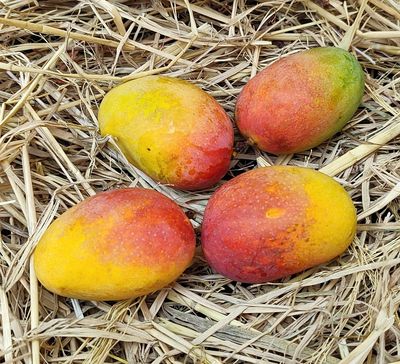
How to naturally ripen fruits at home
Once you have your box and inner fillings, only other thing you need is a fruit that harvested not too raw so that it all enzymes or at least enough enzymes to kickstart the ripening process. Put that fruit in, make a couple of layers if you wish with fillings acting as separator between layers. Close the top and put in an area of your home that is warm but not in direct sunlight. Most Kitchens have places like these. Ensure you check once a day and you will start seeing some color changes and some aroma, both increase everyday till the fruit ripens. While checking, do not open the box for long time, keep is brief and shut it back till fruits are not ripe.
How to know whether fruit is ripe
Ripe fruit usually gives off an aroma that tells your reptilian brain to just eat it (emoji) and that’s a sign. Some fruits are low on aroma so ripeness is tested by gently pressing. Ripe fruits are softer, that’s nature. In many cases, market has convinced you to eat raw fruits so much that you no longer like the taste and feel of ripe versions of same fruit.
Benefits of Naturally Ripened Organic Fruits
Fully ripe fruits are nutritionally stronger esp on two aspects. Micronutrients like anti-oxidants, flavonoids, anthocyanins increase as a fruit ripens. For minerals like Iron, potassium, magnesium, and calcium, the absorption is much better from ripe fruits as absorptions blockers present in unripe fruit get metabolized during ripening process. Vitamin C increases with ripening for most fruits though there are exceptions like oranges and grapes where Vit C levels are higher in semi ripe stage. Being organic adds to natural nutrition density. (View our catalogue of Naturally Ripened Fruits)
End Note
What we follow at Sanesa Yourganic is just a larger and harder box is used some cases. We also get supplies in bulk so stacking up a lot of boxes next to each other aids in slightly faster rate of natural ripening compared to what you will see at home but essence remains the same.
By Manu Digvijay Singh & Varun Goyal
Display prices in:INR