Trusted by Families Since 2017 • Naturally Ripened Organic Fruits, Organic Vegetables and more groceries • No-Questions-Asked Refunds
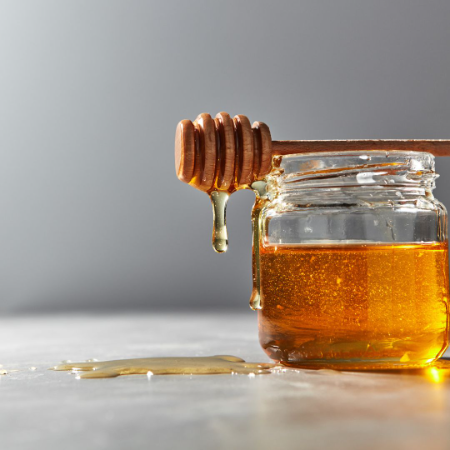
Punjab Wild Forest Honey
SKU 271
₹375.00
Price incl. GST (0%) ₹0.00
Weight
In stock
1
Estimated delivery time
Local delivery: today after 10:00 AM, depending on your address
Customer reviews
Reviews only from verified customers
No reviews yet. You can buy this product and be the first to leave a review.
Punjab Wild Forest Honey
Product Details
UPC: 684781078
Brand: Sanesa Yourganic
🍯 Raw Punjab Wild Forest Honey from Rampura Phul
An easy-pouring wild honey from the native Kikkar or Babool (Acacia) Groves of Punjab’s Malwa plains.
Near Rampura Phul in Bathinda district, a local family has collected honey from wild colonies for generations. They harvest only part of each comb, leaving the rest in place so the bees retain food stores for the colony. The honey they bring back has a refreshing taste and a light, easy pour.
🌳 The Kikkar Groves of Punjab
The family finds the wild combs in small wooded patches or forests that are called beeharh. Kikkar, also known as babool, is a native thorn tree with fine leaves and small, round clusters of yellow flowers. Botanically it is known as Vachellia nilotica, formerly Acacia nilotica. It grows in Bathinda’s Malwa plains alongside ber, neem and thorny scrub. Its flowers offer visiting bees abundant pollen and small amounts of concentrated nectar.
The kikkar groves are where this honey is harvested. The bees forage across the surrounding landscape as different plants come into flower.
🐝 Wild Rock Bees and a Partial Comb Harvest
The honey comes from Apis dorsata, the giant honeybee, also known in India as the rock bee. A colony builds one large, exposed comb, often suspended from the underside of a tree branch. The harvesting family takes a portion of the comb and leaves the remainder with the colony.
The honey is unpasteurized, untreated and unrefined. Honey is the only ingredient in the jar.
🍯 An Aged Batch with a Free-Flowing Pour
This is an aged batch, harvested nearly five years ago. Across the Punjab harvests we’ve sourced over the years, the honey has always poured freely, even when freshly harvested.
It has a subtle, refreshing note that reminds us of babool. You may know the same tree from datun, the tender twig traditionally used to clean the teeth.
| Attribute | Details |
|---|---|
| Origin | Native Kikkar or Babool (Acacia) Groves near Rampura Phul, Punjab |
| Honeybee | Giant honeybee or rock bee (Apis dorsata) |
| Harvest | A local family takes only part of each wild comb and leaves the rest for the bees |
| Processing | Unpasteurized, untreated and unrefined |
| Taste and texture | Refreshing taste with a light, easy pour |
| Ingredient | Honey |
🌿 Nutritional Profile & Health Highlights
Honey gets its sweetness and most of its energy from two naturally occurring sugars, fructose and glucose.
| Nutrient | Typical honey per 100 g | Approx. per teaspoon (7 g) |
|---|---|---|
| Energy | 304 kcal | 21 kcal |
| Carbohydrates | 82.4 g | 5.8 g |
| Total sugars | 82.1 g | 5.7 g |
| Protein | 0.3 g | Trace |
| Fat | 0 g | 0 g |
These are USDA reference values for honey. See the jar for the product’s nutrition declaration.
Consumption Note: Do not give honey to infants under 12 months.
🥄 How to Enjoy Punjab Wild Forest Honey
- Over plain dahi. Add a thin drizzle and a handful of toasted nuts.
- With warm toast or roti. Let a little butter melt first, then finish with a spoonful of honey.
- In a lemon dressing. Whisk a teaspoon of honey with a tablespoon of lemon juice, two tablespoons of olive oil and a pinch of salt. Spoon over sliced cucumber or roasted carrots.
Storage: Keep the jar tightly closed in a cool, dry cupboard away from direct sunlight. Use a clean, dry spoon.
🐝 Fun Fact
Giant honeybee colonies can move with the seasons. Researchers have observed a colony return to the same tree branch months after leaving it and build a new comb there.
🔍 Our 5-Point Purity Promise
- Certification checks. We verify the documentation behind any certification we cite.
- Producer references. We check who is behind the harvest and where it comes from.
- Personal evaluation. For forest honey, we ask where the colonies nest, how much comb is taken and how the honey is handled after collection.
- Taste profiling. We assess flavor, aroma and texture as part of selection.
- Laboratory testing. We use lab analysis as part of Sanesa’s sourcing and quality checks.
🌱 Sustainability & Service Promise
- 🐝 Honey left for the bees. The family leaves part of the comb in place so the colony keeps food stores after the harvest.
- 🌳 Generations of local knowledge. We source this honey from a family that knows the native kikkar groves around Rampura Phul and the wild colonies that nest there.
🚚 Fast NCR Delivery
Order before 4 PM in Gurgaon or before 2 PM in Delhi, Noida, Faridabad and Indirapuram for same-day delivery, subject to availability and your delivery slot. Whether you’re in Gulmohar Park or Greater Kailash II in Delhi, or DLF Phase 2 or Nirvana Country in Gurgaon, add a jar to your order of 100% chemical-free vegetables and naturally ripened, carbide-free fruits.
Try the first spoonful on its own to taste this harvest from Punjab’s kikkar groves.
🔎 Search for Our Punjab Honey as:
Punjab wild forest honey, raw Punjab honey, Rampura Phul honey, Bathinda wild honey, honey from kikkar groves, babool forest honey, rock bee honey, Apis dorsata honey, Punjab shahad, wild forest honey delivery Delhi NCR
Display prices in:INR