Trusted by Families Since 2017 • Naturally Ripened Organic Fruits, Organic Vegetables and more groceries • No-Questions-Asked Refunds
Soya Chaap
SKU 00610
₹125.00
Price incl. GST (5%) ₹5.95
Weight
In stock
1
Have questions?
Customer reviews
Reviews only from verified customers
No reviews yet. You can buy this product and be the first to leave a review.
Soya Chaap
Product Details
Brand: Sanesa Yourganic
Fresh Soya Chaap - Made with Whole Soybeans | Fresh Soya Chaap Delivery in Delhi NCR
Fresh Soya Chaap - Made with Whole Soybeans
Made from Whole Soybeans. Carefully Rolled. Firm Enough for Your Favourite Recipes. 🌱
Soya Chaap has become a much-loved vegetarian favorite in North India and for good reason.
It is chewy, satisfying, wonderfully absorbent and incredibly versatile, making it particularly well suited to rich Indian gravies, tandoori preparations, chaap rolls and stir-fries.
Our Fresh Soya Chaap is made from a carefully selected combination of soya, whole wheat flour, besan, rice flour and suji.
But what makes it particularly interesting is the process.
We begin with dehusked and broken whole soybeans, soak them for 8-10 hours, separate the soybean pulp from the liquid, and then combine the resulting soy material with finely milled whole-soy flour and whole wheat flour, along with besan, rice flour and suji.
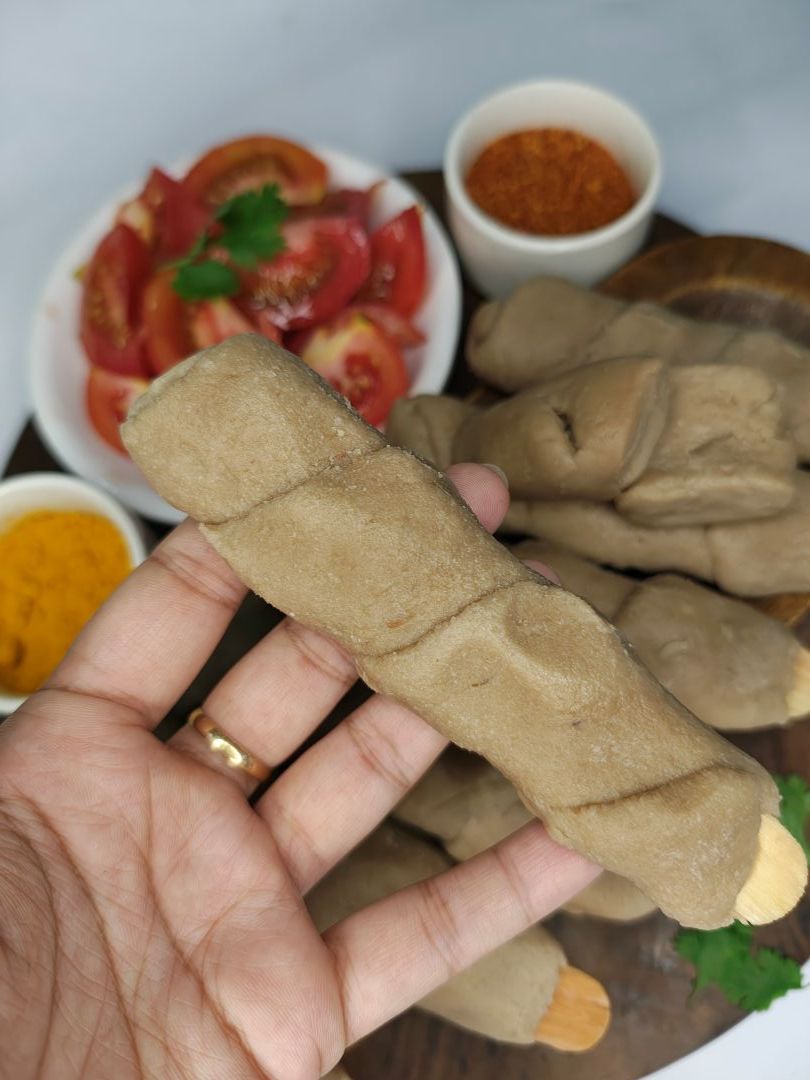
The dough is allowed to rest before being shaped into pedas, rolled into thin sheets and wrapped by hand around sticks.
The sticks are then dipped in hot water and subsequently cooled in room-temperature water. This carefully controlled setting process helps the chaap develop the firm, cohesive structure needed to withstand cooking without falling apart.
The result is fresh soya chaap with a meaty, chewy bite and excellent ability to absorb marinades and gravies.
And behind it is the same farmer we trust for our fresh tofu, a retired teacher who has been working in organic farming for almost a decade, on his farm near Bhiwadi.
Why We Like This Soya Chaap
🫘 Starts with Whole Soybeans
Unlike products made primarily from highly refined soy ingredients, our process begins with whole soybeans.
The beans are first dehusked and broken, then soaked for approximately 8-10 hours before processing.
This gives us a soy base from which the chaap is subsequently prepared.
🌾 A Thoughtful Blend of Ingredients
Our formulation combines soy with traditional Indian flours and grains:
| Ingredient | Approx. proportion |
|---|---|
| Soya | 69% |
| Wheat C-306 | 20% |
| Besan | 5% |
| Rice | 5% |
| Suji | 1-2% |
Percentages are approximate; minor variation may occur because of the 1-2% range specified for suji.
The combination is not simply about ingredients, it is important for achieving the texture, binding and cooking stability that good chaap needs.
💧 The Soy Is Carefully Demilked
After soaking, the broken soybeans are processed and the soy pulp is separated from the liquid, a process commonly referred to as demilking.
The resulting soy material is then combined with finely milled whole-soy flour and the other ingredients.
👐 Rolled Around Sticks, the Traditional Way
Once the dough has rested for approximately 30 minutes to 1 hour, it is divided into small pedas.
Each peda is rolled into a flattened sheet and then wrapped around a stick, creating the characteristic layered appearance of soya chaap.
♨️ A Special Hot-Water Setting Process
This is one of the most interesting parts of our chaap-making process.
The chaap-covered sticks are dipped into hot water, followed by water at room temperature.
This helps the ingredients bind together and gives the chaap the structural strength it needs so that it doesn't simply disintegrate when cooked or exposed to water during preparation.
That matters enormously when you're making a good chaap curry or tandoori chaap.
What Makes Our Soya Chaap Different?
🌱 69% Soya: Soy is the principal ingredient in our formulation.
🫘 Whole-soybean Based Process: We begin with dehusked, broken soybeans rather than simply starting with a finished chaap mix.
🌾 Whole Wheat Flour: We use whole wheat flour rather than relying solely on maida or refined flour.
🥣 Traditional Indian Ingredients: Besan, rice and suji complement the soy and contribute to texture and binding.
👐 Rolled Around Sticks: Each piece develops its characteristic chaap form through the rolling process.
♨️ Carefully Set for Cooking Stability: The hot-water and cooling process helps the chaap retain its structure during cooking.
🚫 No Unnecessary Flavoring or Masala: We leave the seasoning to you, so the chaap can work across different recipes and cuisines.
Meet the Farmer Behind Your Soya Chaap 👨🌾
Our Soya Chaap comes from the same farmer near Bhiwadi from whom we source our fresh tofu.
He is a retired teacher who has spent almost a decade working in organic farming.
For us, that story is meaningful because farming was not simply his inherited profession, it became a second chapter of his life.
His experience, patience and approach to food production are exactly the kind of qualities we look for when building relationships with farmers and food producers.
At Sanesa, we believe that knowing who makes our food is an important part of knowing our food.
How Is Our Soya Chaap Made?
Here's the process, step by step:
1️⃣ Dehusking & breaking
Whole soybeans are dehusked and broken.
2️⃣ Soaking
The beans are soaked for approximately 8-10 hours.
3️⃣ Demilking
The soaked soy is processed and the pulp is separated from the liquid.
4️⃣ Mixing
The soy material is mixed with finely milled whole-soy flour, whole wheat flour, besan, rice flour and suji.
5️⃣ Resting
The dough is allowed to rest for approximately 30 minutes to 1 hour.
6️⃣ Rolling
Small portions of dough are made into pedas, rolled flat and wrapped around sticks.
7️⃣ Setting
The sticks are dipped in hot water and then in room-temperature water to help the chaap bind and hold its shape.
8️⃣ Ready for your kitchen
The resulting fresh chaap is ready to be marinated, cooked, grilled, tandoored or added to your favourite gravy.
Nutritional Profile
Soya is naturally rich in protein, while the wheat, besan and rice contribute additional carbohydrates, protein and micronutrients.
Because the final nutritional composition depends on the exact moisture content and formulation, the declared nutrition values on the product label should be used for precise quantities.
Key nutritional characteristics
| Naturally Present | Why It Matters |
|---|---|
| Soy protein | Provides all nine essential amino acids |
| Plant protein | Helps make chaap a substantial vegetarian protein food |
| Unsaturated fats | Soy naturally contains predominantly unsaturated fatty acids |
| Iron | Naturally present in soy, wheat and besan |
| Magnesium | Naturally present in soy and grains |
| B vitamins | Present in varying amounts across the ingredients |
Health Highlights
🫘 A Protein-Rich Vegetarian Food
With soya making up approximately 69% of the formulation, protein is one of the defining nutritional characteristics of our chaap.
Soy protein is also considered a complete protein, providing all nine essential amino acids.
🌾 More Than Just Soy
The addition of whole wheat, besan and rice means this is not simply a soy-protein product. The different ingredients contribute their own nutritional characteristics while helping create the distinctive texture of chaap.
🌱 A Useful Meat Alternative
Soya Chaap can be particularly useful for people looking to add plant-based protein and variety to their meals without giving up the familiar experience of a substantial, chewy centre that works well with Indian marinades and gravies.
⚠️ A Note for Consumers
Our Soya Chaap contains soy and wheat and therefore is not gluten-free. Anyone with a soy or wheat allergy/intolerance should avoid it.
The Best Ways to Eat Our Soya Chaap 🍢
This is where chaap really comes into its own.
Because of its firm texture and ability to absorb flavours, it works beautifully with strong marinades and rich sauces.
Try it as:
- 🔥 Tandoori Soya Chaap: marinate in yoghurt, ginger, garlic and spices before grilling
- 🍛 Malai Chaap: pair with a creamy, mildly spiced marinade
- 🌶️ Achari Chaap: use mustard, pickle spices and yoghurt for a punchy preparation
- 🧅 Masala Chaap: cook with onions, tomatoes and Indian spices
- 🥘 Chaap Curry: simmer in your favourite North Indian gravy
- 🌯 Chaap Rolls: slice cooked chaap and wrap with onions, chutney and salad
- 🥢 Stir-Fried Chaap: slice and toss with vegetables and sauces
Our favorite way?
Marinate generously, grill until lightly charred, and finish with a squeeze of lemon and some chaat masala. 🔥
Fun Fact 🌱
The word "chaap" is commonly used in North Indian cuisine for this distinctive, stick-shaped preparation.
But the really interesting part is that the characteristic layered, fibrous appearance of soya chaap isn't simply moulded into shape.
The dough is actually flattened into a sheet and wrapped around a stick, layer after layer, before being set in hot water.
That rolling process is what gives chaap much of its recognisable appearance and satisfying bite.
Our 5-Point Purity Promise
Every product at Sanesa goes through our five-point sourcing and quality process:
✅ Ingredient & Sourcing Verification: We verify the ingredients, their source and the production process.
✅ Trusted Farmer Relationships: We source from farmers and food producers whom we know and have personally evaluated.
✅ Personal Evaluation: We taste and assess products before listing them.
✅ Process & Quality Evaluation: We evaluate how the product is made, including texture, taste, cooking performance and overall quality.
✅ Laboratory Testing: Where appropriate, batches undergo laboratory testing as part of our quality assurance programme.
Sustainability & Service Promise
🌱 Sourced from a farmer with nearly a decade of organic farming experience
👨🌾 Sourced from a farmer we know and trust
🫘 Made with soya as the principal ingredient
🌾 Made using whole wheat flour, besan, rice and suji
🚫 No unnecessary flavouring or masala
👐 Carefully prepared and shaped
📦 Freshly handled and packed with care
❄️ Keep refrigerated and consume within the recommended period
Fresh Soya Chaap Delivery in Delhi NCR 🚚
Fresh chaap deserves careful handling.
Sanesa Yourganic offers delivery across Delhi NCR, including Delhi, Gurugram, Noida, Faridabad, Indirapuram and nearby areas.
As this is a fresh product, refrigerate it promptly after delivery and follow the storage and consumption instructions mentioned on the package.
Serious about your chaap? Start with the chaap itself.
69% soya. Whole wheat. Besan. Rice. Suji.
A careful soaking and demilking process.
A dough that's rested, rolled and wrapped around sticks.
And a special hot-water setting process that helps it hold together when you cook it.
Fresh Soya Chaap by Sanesa Yourganic - made thoughtfully, so you can cook it your way. 🌱
SEO Keywords
Fresh Soya Chaap, Soya Chaap Delhi NCR, Fresh Soya Chaap Delhi, Soya Chaap Delivery Delhi, Fresh Soya Chaap Gurugram, Fresh Soya Chaap Gurgaon, Fresh Soya Chaap Noida, Fresh Soya Chaap Faridabad, Fresh Soya Chaap Indirapuram, Soya Chaap Made from Whole Soybeans, Whole Soybean Soya Chaap, Fresh Soy Chaap, Soya Chaap without Masala, Soya Chaap without Additives, Plant Based Protein Delhi NCR, Vegetarian Protein Food, Fresh Chaap Delhi, Soya Chaap for Tandoori, Tandoori Soya Chaap, Malai Soya Chaap, Healthy Soya Chaap, Fresh Vegetarian Chaap.
You May Also Like
Display prices in:INR